Weight of Evidence: Asbestos Records in the Building Safety Case
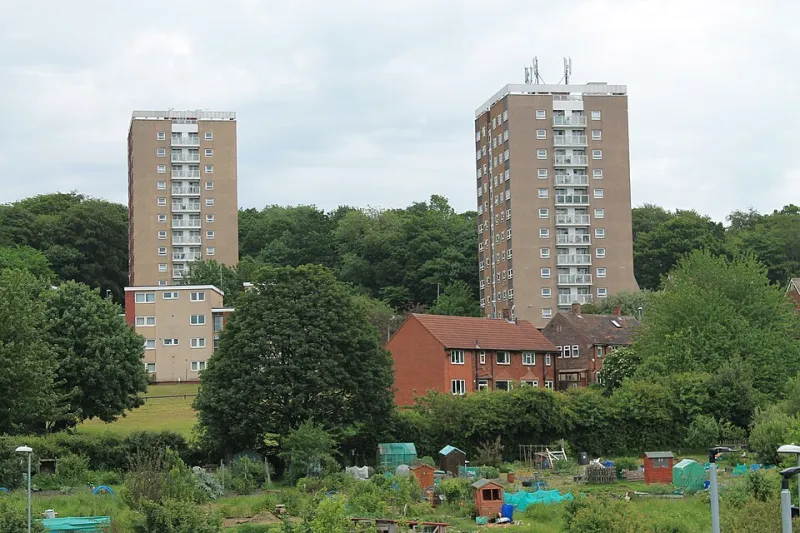
Photo: Simon Cobb, CC0, via Wikimedia Commons
By November 2026, the Building Safety Regulator's regime for higher-risk residential buildings is no longer a transitional concern. Principal accountable persons (PAPs) are expected to demonstrate that fire and structural risks, and the measures taken to control them, are understood across the whole building. Asbestos belongs inside that same line of reasoning. It is not a separate compliance silo, and the survey folder alone will not carry the weight.
A higher-risk building is generally one at least 18 metres tall or with seven or more storeys, containing two or more residential units. In such buildings, the safety case is a living argument: this is what could go wrong, this is what we know about the building, this is what we have done, and this is how we assure ourselves it remains true. Asbestos evidence must be woven through that argument, particularly where the material sits in common parts, plant areas, risers, roofs and shared services.
The safety case asks a different question
An asbestos survey answers a factual question: what material is present, where, and in what condition. The safety case asks a management question: how does the organisation know that risk is being controlled, and what evidence exists to prove it?
That distinction matters. A register with no dated review, a management plan with no named owners, or a survey that leaves inaccessible areas parked as future work will not show control. It may show that a survey once took place. Regulators and insurers are looking for the former, not the latter.
Three records, one line of reasoning
The asbestos file should read as a coherent evidence chain rather than a set of unrelated documents. Three elements do most of the work.
First, the asbestos register. It should identify the building, the responsible dutyholder and the common parts within scope. Entries need enough location detail to be actionable: floor, room, riser, plant item or external elevation. Condition, accessibility, material type and priority should be recorded, along with the date of assessment and the survey it derives from.
Second, the asbestos management plan. This is where the register becomes a programme. The plan should set out what will be done, by whom, by when, and how completion will be verified. It should distinguish between monitoring, encapsulation, repair, removal and temporary controls. It should also state how no-access areas are presumed and investigated, rather than leaving them as an unresolved footnote.
Third, common-parts records. These are the bridge between the asbestos file and the building safety case. They should show how shared areas, service risers, roof spaces, plant rooms and communal circulation are identified, who is responsible for them, and how asbestos controls interact with other building safety measures. Where responsibilities are split between the PAP and other parties, the boundary should be documented rather than assumed.
The golden thread principle applies here as much as it does to fire safety. Information should be accurate, up to date, attributable and retrievable. A safety-case reviewer should be able to follow a line from a risk identified in the register to an action in the plan, a completion record, and a review date.
Where the gaps usually appear
In practice, the weaknesses tend to be consistent. A register may be technically complete but too generic to support decisions. Common parts may be listed in the survey yet absent from the management plan. No-access areas may be recorded without a presumption, an investigation date or an owner. Contractor controls may exist on paper but not in site records. Changes to the building, such as new plant, cable routes or refurbishment, may not have triggered an asbestos review.
Another common gap is narrative disconnect. The safety case may describe asbestos as managed, while the supporting file contains no recent assurance activity. Insurers and regulators can test that inconsistency quickly. They may ask who reviewed the register, what changed since the last review, how remedial actions were closed out, and how the PAP satisfies itself that contractors are working to the plan.
A practical cross-check for 2026
Facilities teams preparing for a safety-case conversation can use a short cross-check to test whether the asbestos file is evidence-ready.
- Does the register name the building, the PAP and the common parts within scope?
- Is every common part accounted for, including risers, roof voids, plant rooms and shared circulation?
- Are no-access areas recorded with a presumption, a rationale and a dated plan to investigate?
- Are condition, priority and review dates current, with a named owner for each action?
- Does the management plan link each significant risk to a control, a timescale and a completion record?
- Are contractor asbestos controls evidenced through inductions, method statements and site checks?
- Is there a change-control route for building works, plant replacement and service alterations?
- Does the safety-case narrative cite the asbestos file, rather than merely refer to it in general terms?
- Can an insurer or regulator follow the assurance trail from risk to review without asking for missing documents?
- Is the next review scheduled and resourced, with senior oversight recorded?
None of these questions requires a new bureaucracy. They require the existing file to be joined up, current and honest about uncertainty. Where information is missing, the safety case is stronger when the gap is stated and an action is owned than when the file implies a completeness it cannot prove.
Making the file stand up
The asbestos file is not competing with the safety case; it is part of the evidence base. For PAPs in higher-risk buildings, the practical task in 2026 is to make that relationship explicit. Align the register with common parts, turn the management plan into a dated programme, keep contractor and change records, and show how assurance is maintained between reviews.
That is a defensible position. It gives the Building Safety Regulator a clear account of how asbestos risk is controlled, and it gives insurers and residents the same confidence. The survey folder records what was found. The safety case should show what the organisation has done with it.