Before Completion: Auditing the Asbestos File in a UK Commercial Property Purchase

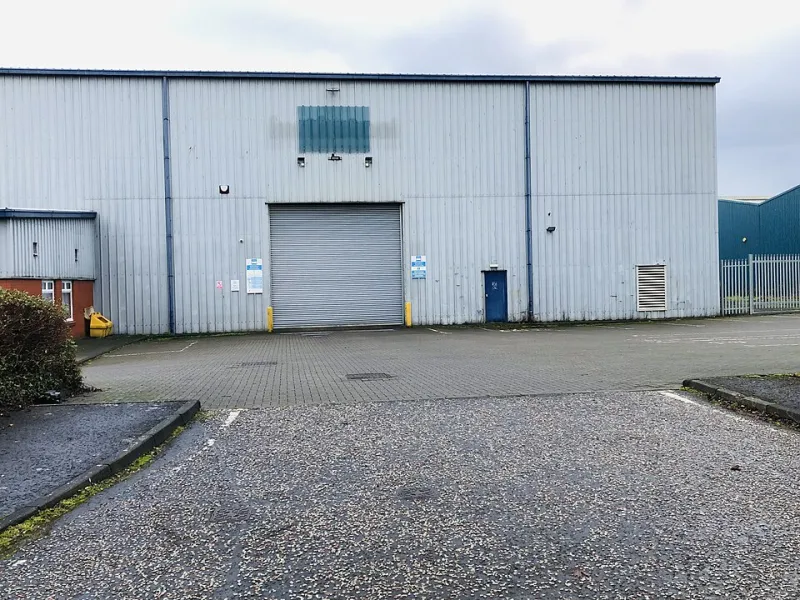
Photo: Andrew Curtis , CC BY-SA 2.0, via Wikimedia Commons
Why the asbestos file matters at completion
In UK commercial property transactions, attention often focuses on title, service charge, planning and building condition. Asbestos records can be treated as a technical annex. That is a mistake. Under the Control of Asbestos Regulations 2012, the duty to manage asbestos in non-domestic premises rests with the person responsible for maintenance and repair. When ownership or occupation changes, so does the practical burden of that duty. A missing or outdated file does not stay in the past; it becomes an immediate management problem for the incoming party.
A complete asbestos file is evidence of a controlled approach, not merely a collection of reports. It should tell the reader where asbestos-containing materials are, or are presumed to be; what condition they are in; who can disturb them; and what action has been taken. Without that narrative, a buyer or tenant cannot assess risk, budget for remediation or brief contractors safely.
What a complete file looks like
At minimum, a robust file should include a current asbestos register with clear material descriptions, locations and sample references; the management survey report and floor plans marked with asbestos-containing materials; laboratory certificates; risk assessments and priority ratings; condition monitoring and re-inspection records; an action plan with responsibilities and target dates; and records of any removal, encapsulation or repair.
Where works have taken place, supporting documents should include refurbishment and demolition survey reports, contractor method statements, waste consignment notes, clearance or air-monitoring certificates and confirmation of licensed contractor involvement where required. The file should also show how information has been shared: contractor inductions, permit-to-work records, asbestos awareness training and correspondence with tenants or building managers.
A useful test is whether a competent contractor could arrive on site, read the file and understand which areas to avoid without a site walkover. If not, the file is incomplete.
Red flags in legacy management surveys
Legacy surveys are common in older commercial stock, and they are not automatically unreliable. Problems arise when they are undated, unsupported or disconnected from the building as it stands today. Warning signs include surveys with no floor plans or with room names that no longer match the property; materials recorded only as 'suspected' without sampling or a reasoned presumption; missing sample locations; risk ratings without a stated method; no accessibility notes; and no evidence of re-inspection.
Another concern is a survey that recommends action but contains no action plan, or one that records asbestos-containing materials in good condition without explaining how that conclusion was reached. A management survey is not a refurbishment and demolition survey. If the incoming occupier plans fit-out, strip-out or intrusive maintenance, a management survey alone will not discharge the pre-works information requirement.
Missing removal records are equally important. A room may have been cleaned following removal, but without waste consignment notes, clearance certification and a revised register, the incoming duty holder cannot rely on an absence of asbestos. Similarly, a single 'no asbestos' letter with no scope, date or surveyor details should be treated with caution.
Closing the gaps before handover
The pre-completion period is the best time to resolve uncertainty because the seller or outgoing tenant still has access, knowledge and contractual influence. Buyers and tenants should request a current asbestos register and survey, not simply a report from several years ago. If the transaction involves works, they should commission a refurbishment and demolition survey before exchange or make completion conditional on its findings.
Where records are incomplete, a targeted management survey or condition re-inspection can be commissioned. The scope should be agreed in writing, with access to all relevant areas and a requirement for drawings. Any removal or remedial work should be completed by a competent contractor and documented in a revised register.
Contractual protections are useful but should not replace information. Warranties and indemnities may address financial loss, but they do not tell a facilities team where not to drill. The handover pack should include a named duty holder contact, the asbestos register, drawings, action plan and a schedule of outstanding actions. For tenants, lease obligations should be checked: responsibility for asbestos can sit with the landlord, the tenant or both, depending on the terms.
A controlled handover
Asbestos due diligence is not about creating alarm; it is about establishing a reliable baseline. A complete file allows the incoming party to budget, plan and communicate. An incomplete file should be treated as a finding in its own right, not a paperwork nuisance. Before completion, ask who will hold the duty to manage, where the register will live and how contractors will be informed. DG Asbestos Compliance supports buyers, tenants and facilities teams with survey review, gap analysis and handover documentation so that the next occupier inherits clarity rather than uncertainty.