Pre-Works Intelligence: Getting Refurbishment Surveys Right on UK Upgrade Projects
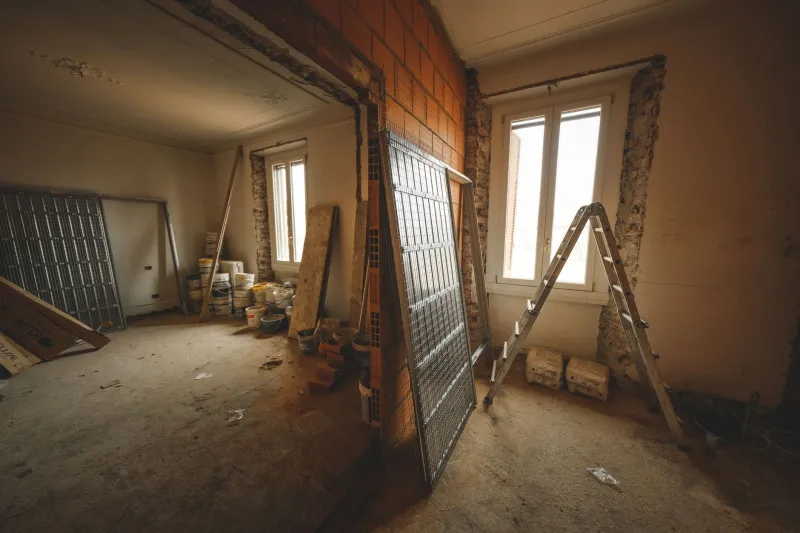
Refurbishment projects rarely fail because the design was wrong. More often, they stumble over something buried in a wall, ceiling void or floor slab that nobody priced for. In UK commercial property upgrades, the refurbishment and demolition survey is the intelligence that keeps the strip-out sequence honest. Yet it is still too often treated as a late procurement item, ordered after the skip has been booked and the labour is on site.
That is a false economy. A management survey has its place: it supports the duty to manage under the Control of Asbestos Regulations 2012 by locating, so far as reasonably practicable, asbestos-containing materials in premises during normal occupation. It is deliberately non-destructive. It does not open sealed voids, remove finishes or inspect areas that are unsafe or inaccessible. Once a project moves from occupation to alteration, that limitation becomes a commercial and safety risk.
Why a management survey stops short
A management survey is built around continuity. It presumes the building will remain in use, that finishes will stay in place and that disturbance will be limited. That is exactly what makes it unsuitable as the sole asbestos evidence for a strip-out.
Refurbishment and demolition surveys are intrusive by design. They need to locate, so far as reasonably practicable, asbestos-containing materials in the areas affected by the works. That may mean opening ceiling voids, lifting floor coverings, accessing risers, sampling insulated services and inspecting behind partitions. The surveyor is not trying to catalogue every fibre in the building; the objective is to give designers and contractors reliable information about the materials they are likely to disturb.
A common misunderstanding is that the survey is a warranty that no asbestos exists. It is not. It is a competent assessment of the scope, supported by sampling and inspection. The report should be clear about areas accessed, areas not accessed, presumptions made and limitations recorded. That clarity matters when a contractor is planning work and when a dutyholder is demonstrating compliance.
When an intrusive survey is required
Under the Control of Asbestos Regulations 2012, dutyholders must manage asbestos risk in non-domestic premises. Where refurbishment or demolition is planned, the survey must be suitable for the work. A management survey prepared for routine occupation will usually not meet that test if the project involves intrusive alteration.
CDM 2015 adds a project dimension. Pre-construction information must be passed to designers and contractors, and for existing buildings that information should include asbestos survey findings and the management arrangements in place. If the survey is incomplete, the principal designer and principal contractor are left planning around assumptions rather than evidence.
The trigger is not only full demolition. A refurbishment survey may be needed for a CAT B fit-out, a plant replacement, a roof upgrade, a partition removal or a phased strip-out. Even a small alteration can disturb materials that a management survey recorded only as presumed or inaccessible. Where the scope is partial, the survey should be targeted to the areas affected by the works, with clear boundaries and access requirements agreed in advance.
In 2026, programmes are also more compressed. Projects are often procured in stages, with design developing while early works begin. That makes it tempting to rely on an old register. The safer approach is to commission the intrusive survey as soon as the workscope is stable enough to define, and to update it if the scope changes materially.
Commissioning without disrupting occupants
An intrusive survey in an occupied building needs a plan, not just a purchase order. The starting point is a scope meeting with the principal designer, contractor, building manager and surveyor. Agree which zones will be accessed, what services need isolating, how finishes will be reinstated and how occupied areas will be protected.
Phasing is usually essential. A floor-by-floor or wing-by-wing approach can keep the building operational while giving the surveyor uninterrupted access to the areas being altered. Out-of-hours working may be appropriate for retail, hospitality or clinical environments, but it should be planned with the same rigour as daytime work.
Practical controls should include sealed screens or sheeting where dust could migrate, permit-to-work arrangements, isolation of services where required, and clear communication with occupants. The surveyor should be competent, insured and able to demonstrate appropriate accreditation and quality systems. The method statement should explain how samples will be taken, how openings will be made good and what will happen if unexpected materials are found.
Common mistakes that leave contractors exposed
Several failures recur across UK projects:
- The survey scope is based on the architect's early layout rather than the actual strip-out scope.
- Access is limited to occupied areas, leaving risers, voids and roof spaces uninspected.
- An existing asbestos register is treated as current without checking its date, limitations and relevance to the works.
- The report is issued but not explained to the trade contractors who will disturb the fabric.
- Newly found materials are removed without updating the register or the plan of work.
- Waste documentation and clearance arrangements are left until the end of the project.
Each of these creates a gap between the paper file and the site reality. Contractors then work around uncertainty, often with stopping-and-starting costs, variation claims and avoidable exposure risk.
The better model is straightforward: define the works, commission the right survey, share the findings early, and keep the asbestos information live as the project progresses. DG Asbestos Compliance sees the refurbishment survey not as a procurement box to tick but as pre-works intelligence. When it is commissioned properly, the skip arrives at the right time, and the people emptying the building know what they are dealing with.