The Unsurveyed Space: Turning No-Access Findings into a Defensible Management Plan

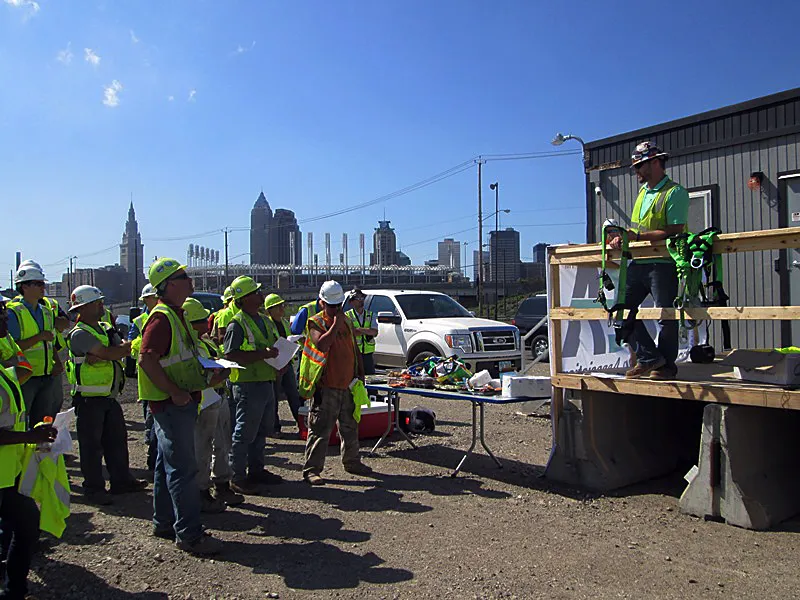
Photo: Thomas Nugent , CC BY-SA 2.0, via Wikimedia Commons
When the report says 'no access'
A refurbishment or management survey lands on the desk. Most rooms are covered. Then come the entries that matter just as much: riser cupboard locked, ceiling void sealed, roof space inaccessible, tenant floor not entered. These are not unusual findings in UK commercial property. They are also not administrative loose ends. Under the Control of Asbestos Regulations 2012, the duty to manage asbestos in non-domestic premises does not pause because a surveyor could not get through a door.
The practical question for dutyholders is not whether the survey is perfect. It is whether the gaps are known, recorded, prioritised and being closed in a way that can be evidenced. An incomplete survey can still support compliance, provided the unknown areas are treated as a live management task rather than a footnote.
Why an inaccessible area is a management issue
The purpose of an asbestos survey is to provide sufficient information for the dutyholder to manage risk. Where access is not possible, the surveyor cannot confirm presence or absence of asbestos-containing materials. The sensible and regulatory expectation is that materials in those areas are presumed to contain asbestos until proved otherwise. That presumption must then be built into the asbestos register, the management plan and the day-to-day controls used by staff and contractors.
This matters most when work is planned. A contractor pricing a small electrical job may assume a sealed ceiling void is empty. A maintenance team may treat a locked riser as low risk because it is rarely opened. In reality, both are unknown spaces. The dutyholder's control measures must reflect that uncertainty, not override it.
From survey footnote to controlled record
The first step is to give no-access findings the same visibility as confirmed findings. Practical actions include:
- Adding each inaccessible area to the asbestos register with a clear 'presumed' or 'no access' status.
- Marking the location on floor plans and, where useful, on photographs so the boundary of the unknown is obvious.
- Recording why access was not possible, the date of the attempt and the name of the person who reported it.
- Setting a review date and assigning responsibility for arranging access.
- Ensuring reception, facilities and maintenance teams know which areas must not be disturbed without clearance.
A short no-access log is often more useful than a lengthy narrative. It should sit alongside the survey report and be reviewed at the same intervals as the wider asbestos management plan.
Arranging access without disrupting operations
Access works need planning, particularly in occupied buildings. Locked risers may require tenant liaison or keyholder arrangements. Sealed voids may need a safe method of opening and making good. Roof spaces may require permit-controlled access and suitable precautions. Tenant areas may need out-of-hours visits or agreed escort arrangements.
Priority should be driven by risk and by forthcoming works. An inaccessible riser in a busy plant room deserves earlier attention than a sealed domestic void in a low-risk area with no planned disturbance. Where a refurbishment or fit-out is due, access should be built into the project programme rather than left to the contractor to discover.
Re-inspection should be scheduled, not left open-ended. A dated commitment to revisit, with a named owner, turns an unresolved survey item into a managed action. If access is repeatedly refused or impractical, record the reason and the interim controls in place.
Briefing contractors on the unknown
Contractors are often the people most exposed to no-access areas. Their induction and permit-to-work arrangements should make the unknown explicit. A simple briefing point is effective: these areas are presumed to contain asbestos until proven otherwise, and no intrusive work is permitted without reference to the dutyholder and, where needed, a further survey.
This should be reinforced in the asbestos register, on drawings and at the point of work. It is not enough to rely on a generic awareness briefing. The message must be specific to the site and to the locations where access was not obtained.
Evidencing a proportionate plan
Regulators and auditors do not expect every square metre of a building to be surveyed where genuine access constraints exist. They do expect a coherent story: what is known, what is presumed, what has been done to close the gap, and what interim controls apply.
A defensible file typically contains the survey report, the no-access log, the updated register, access correspondence, re-inspection dates and evidence that contractors have been briefed. It should also show that the plan is reviewed when circumstances change, such as a tenant vacating, a refurbishment starting or a previously sealed void being opened.
Closing the gap
No-access findings are a normal part of managing older UK commercial stock. They become a compliance problem only when they are left in the report and nowhere else. By recording presumptions properly, scheduling access works, briefing contractors and maintaining a clear evidence trail, dutyholders can demonstrate that an incomplete survey is still a managed survey. The locked room remains a risk, but it does not become a blind spot.